
Can AI Chatbots Change the Future of digital marketing in 2026? 💬
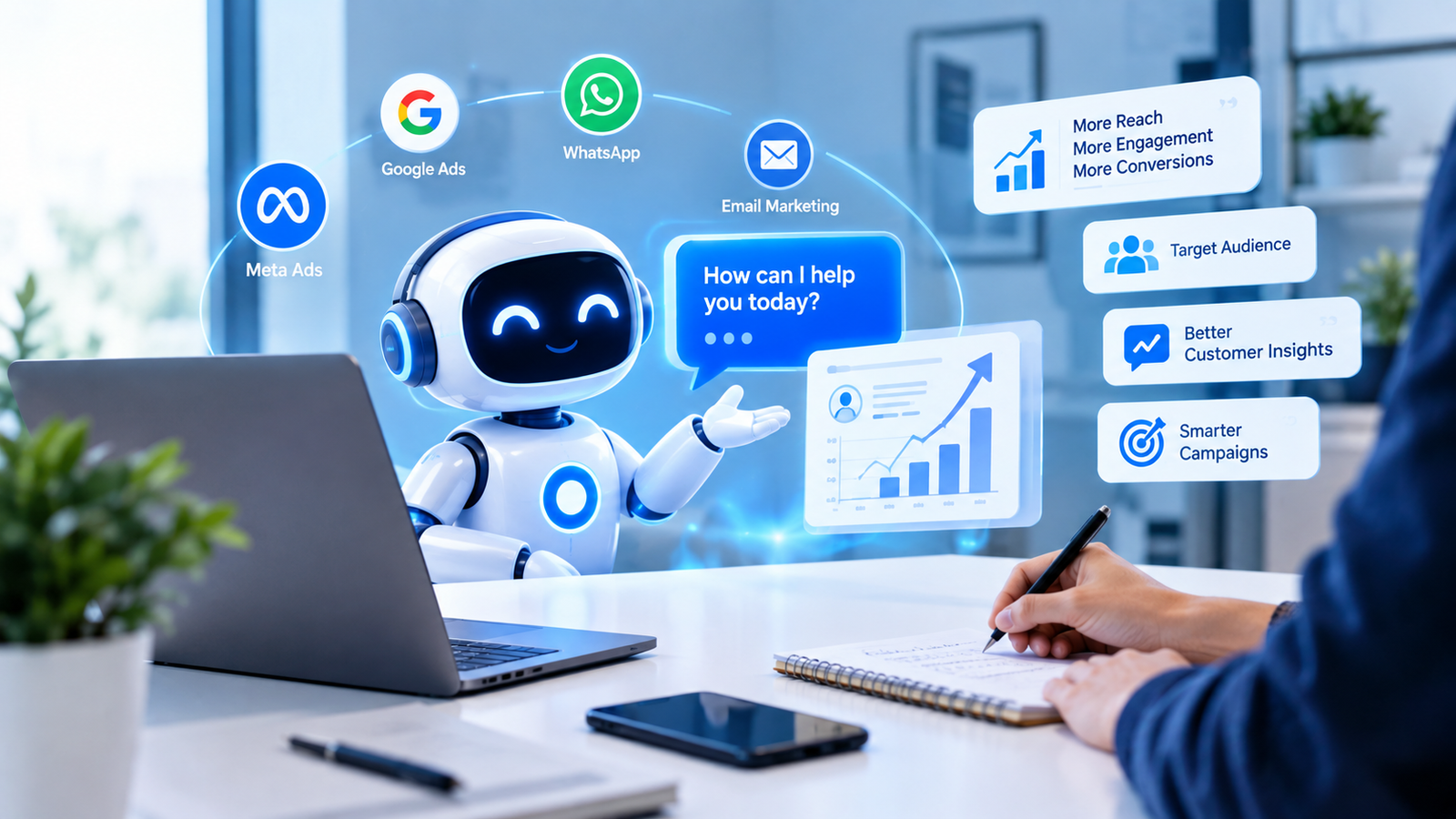
A few years ago, chatbots were clunky little pop-ups that asked “How can I help you?” and then failed to understand anything you typed. Today, AI chatbots have evolved into intelligent, conversational tools that can qualify leads, answer complex queries, recommend products, and even close sales all without human intervention. As the best performance marketer in Calicut, I’ve watched brands go from ignoring chatbots completely to making them a core part of their sales funnel. In this blog, let’s explore how AI chatbots are reshaping marketing, and whether they’re truly the future or just another passing trend.
1. From Simple Bots to Smart Conversational Assistants
Early chatbots followed rigid, rule-based scripts if a customer’s question didn’t match a pre-set keyword, the bot would fail. Modern AI chatbots, powered by natural language processing (NLP) and large language models, can understand context, tone, and even intent. This means they can:
-
Understand casual, conversational language instead of exact keywords
-
Handle follow-up questions within the same conversation
-
Personalize responses based on user history or preferences
-
Switch smoothly between languages
-
Escalate to a human agent only when truly necessary
This shift from “scripted bots” to “smart assistants” is what’s making marketers take chatbots seriously again.
2. How AI Chatbots Are Changing Marketing Strategy
1. Instant Engagement at Scale
Marketing has always struggled with one thing: speed. A lead fills a form, and if no one responds within minutes, interest drops fast. AI chatbots solve this by engaging visitors instantly, 24/7, without needing a human on standby.
2. Lead Qualification Without Manual Effort
Instead of a sales team manually screening every inquiry, chatbots can now:
Ask qualifying questions (budget, requirement, timeline)
Score leads based on responses
Route hot leads directly to the sales team
Filter out irrelevant or spam inquiries
This saves time and ensures sales teams focus only on genuine prospects.
3. Personalized Product Recommendations
E-commerce brands are using chatbots the way a good salesperson would in a physical store — asking questions and suggesting products accordingly. This creates a more human-like shopping experience, even in a fully digital environment.
4. Data Collection and Customer Insights
Every chatbot conversation is a goldmine of data. Marketers can analyze:
Frequently asked questions
Common objections or concerns
Drop-off points in the conversation
Popular product categories
This data helps refine ad targeting, landing pages, and even product offerings.
5. Multi-Channel Presence
AI chatbots today aren’t limited to websites. They’re active on:
WhatsApp Business
Instagram and Facebook Messenger
Google Business Profile chat
Mobile apps
This means brands can maintain a consistent conversational experience across every platform a customer might use.
3. Why Marketers Are Investing More in Chatbots
There are practical,budget-driven reasons chatbots are gaining traction:
- Lower cost per lead: Automating the initial conversation reduces dependency on a large support team.
- Better ad ROI: Faster response times improve conversion rates from paid campaigns, directly impacting ROAS.
- Improved customer experience: Instant answers reduce frustration and cart abandonment.
- Scalability: A chatbot can handle thousands of conversations simultaneously — something no human team can match.
- Integration with CRM and ad platforms: Chatbot data can feed directly into retargeting campaigns and email sequences.
4.Challenges and Limitations to Keep in Mind
AI chatbots aren’t a magic fix, and marketers need to be realistic about their limitations:
- They can’t replace genuine human empathy in sensitive or complex conversations.
- Poorly trained bots can frustrate users if they give irrelevant or repetitive answers.
- Over-automation can feel impersonal, especially for high-ticket or trust-based purchases.
- Regular monitoring is required to fix gaps in bot responses and keep the conversation flow updated.
- Data privacy concerns mean businesses must be transparent about how customer data collected via chat is used.
This is why chatbot marketing works best when it’s paired with strategy — not just plugged in and forgotten.
5. Where This Is Heading
The future of AI chatbots in marketing is moving toward deeper personalization, voice-based conversations, and predictive engagement where a chatbot might reach out proactively based on browsing behavior, rather than just waiting for a message. Combined with AI-driven ad targeting, chatbots are likely to become the connecting layer between paid campaigns, social media, and actual conversions.
For businesses, the real opportunity isn’t just “adding a chatbot” it’s building a conversational funnel that works alongside performance marketing efforts. AI chatbots can capture attention instantly, but converting that attention into real sales still requires smart campaign structuring, retargeting, and continuous optimization. If you’re a business in Kerala looking to combine AI-powered chatbots with a data-driven marketing funnel that actually drives results, working with the best performance marketer in Calicut can help you turn casual chatbot conversations into consistent, measurable sales.
Learn more about AI and its applications from the official Google AI website.